


EY’s 2025 Mobility Consumer Index (MCI) indicates that 50% of global car buyers now prefer a new or used gasoline/diesel vehicle for their next purchase-an increase of more than 13 percentage points compared with last year. Meanwhile, interest in battery-electric vehicles (BEVs) and hybrids declined by approximately 10 and 5 percentage points, respectively. Key reasons highlighted in the report include: Policy fluctuations in major markets, notably the U.S. rollback of fuel-economy standards and Europe’s reevaluation of its 2035 combustion-engine phase-out target. Infrastructure challenges, especially insufficient fast-charging networks in many countries. Cost sensitivity, as EV prices remain higher in many regions despite incentives. Consumer priorities shifting-in China, for example, buyers increasingly […]

According to the National Highway Traffic Safety Administration (NHTSA), the proposed rule would sharply ease fuel-efficiency standards for model years 2022–2031. It would also phase out the “fuel-economy credit trading system” by 2028, making it easier for automakers to comply without investing heavily in fuel-efficient or electric vehicles. Supporters-including Ford Motor Company and Stellantis-argue the rollback will help reduce vehicle production costs and lower car prices for consumers. Critics warn the move will increase fuel consumption, raise pollution levels, and hinder climate-change efforts. Source: Reuters Impact For Consumers New vehicles may become cheaper due to lower compliance costs. However, higher long-term fuel expenses due to lower MPG. For EV Makers […]

Germany, along with several EU member states, believes that due to slower-than-expected EV adoption, rising market competition, and diverse consumer needs, automakers should be granted more flexibility in their powertrain strategies. 🔎 Impact Short-term boost for traditional automakers: If the EU eases emission rules or extends the transition period, manufacturers of hybrid and advanced combustion engine vehicles would benefit. Increased pressure on pure EV makers: A policy relaxation could slow down the market’s shift toward fully electric vehicles, creating a more competitive environment for EV-only brands. More choices for consumers: Buyers may not be forced to choose fully electric vehicles. Hybrids, plug-in hybrids, and efficient ICE models could remain viable […]
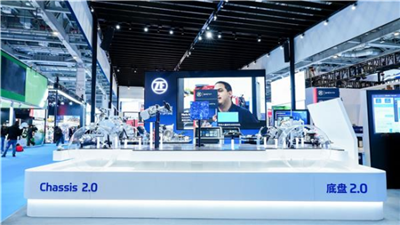
ZF systematically presented its “full matrix” of future-oriented products and technologies, which can be broken down into four key areas: Electrification Solutions: Key Exhibits: Independent repair and remanufacturing solutions for critical EV components, including e-drive axles, power batteries, power electronics (inverters), and thermal management systems. Highlight: Emphasized “disaggregated repair” capabilities for e-drive systems, moving beyond complete assembly replacement. This reduces repair costs for customers and opens up new business opportunities for workshops. Intelligent & Automated Driving Products: Key Exhibits: Focused on calibration and repair solutions for Advanced Driver-Assistance Systems (ADAS), including calibration equipment, software, and training for sensors (cameras, radars). Highlight: Showcased intelligent chassis systems with sensor fusion capabilities, such […]
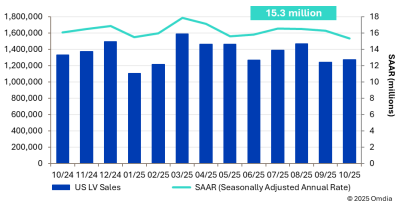
According to the latest forecast from Cox Automotive, U.S. new light-vehicle sales in October 2025 reached an annualized rate (SAAR) of around 15.3 million, down from 16.4 million in September and 16.1 million a year earlier. EV (electric vehicle) sales dropped sharply after a sudden spike in September. Estimated EV sales in October were around 74,835 units, significantly lower both year-over-year and month-over-month. EV market share also fell drastically – from ~11–12% in September down to around 5.2–5.8% in October. The major cause: the expiration of the federal EV tax credit on September 30th. Many consumers rushed to buy EVs before the deadline, causing demand to collapse the following month. […]

Engineering & Technology The U9 Xtreme showcases BYD’s most advanced EV engineering to date. Its four electric motors, each capable of spinning at 30,000 rpm, work together with the high-voltage platform to achieve unprecedented power delivery. The vehicle uses a specially reinforced Blade Battery system designed for extreme thermal and discharge demands. Handling and stability at high speed are enhanced by BYD’s DiSus-X intelligent body control system, a full carbon-fiber aerodynamic package, and a track-grade semi-slick tire compound co-developed with Giti. The braking system features titanium components and carbon-ceramic rotors for high-temperature endurance. Track Achievements Beyond its top-speed record, the U9 Xtreme also recently completed a lap of the Nürburgring […]